
As vehicles collect more and more information, one question has become central: Who controls this data, and to whom do drivers choose to entrust it?
In partnership with Ifop, Auto Platinium surveyed French consumers about their attitudes toward automotive data, their level of trust, and their expectations at a time when the Data Act is reshaping the landscape.
In this interview, Chavarch Margaryan, CEO of Auto Platinium, discusses the key findings of this study and the opportunities this shift represents for both drivers and independent repair shops.
Chavarch Margaryan
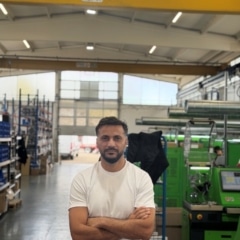
Executive at Auto Platinium
What led Auto Platinium to survey drivers today about the data generated by their cars, and what issues did you hope to better understand through this study?
Our business is the remanufacturing of automotive parts—we deal with issues related to access to repairs and motorists’ freedom of choice on a daily basis. However, we observed two conflicting trends emerging: on the one hand, cars are collecting more and more data; on the other, the introduction of the Data Act, which will fundamentally reshape the landscape of access to this data. In between lies a vast gray area: what do drivers really know about what their cars are recording? Who do they trust? Are they willing to share? We had some insights from the field, but no solid data. So, together with Ifop, we wanted to gauge French public opinion on a topic that’s widely discussed in the industry, but rarely from the perspective of the drivers themselves. The challenge for us was to understand where drivers stand in this transformation—because, ultimately, they are the ones who should benefit from it the most.
The study shows that drivers do not reject the idea of sharing their data, but that they are most likely to accept it when they clearly see its value: 77% accept it for research or road safety purposes, and auto mechanics emerge as the most trusted professionals. What do these results tell you about the evolving relationship between drivers, data, and automotive service professionals?
What struck us is that the French are neither technophobic nor naive: they make very clear-headed distinctions. They willingly accept data when it serves a purpose—road safety, vehicle maintenance—and reject it when it’s used to track them or resold. In other words, it’s not the data itself that’s the problem; it’s how it’s used—and, above all, knowing who receives it. And in this landscape, the auto repair shop stands out as the most trusted third party, ahead of the manufacturer and the insurer. This is a powerful lesson: at a time when everything is going digital, it’s the local service provider—the one we know and already trust with our car—who inspires the most confidence when it comes to our data. I believe this says something important about our industry: trust isn’t imposed by technology; it’s built through relationships. The service professional who can be transparent and helpful with their customers’ data will have a real advantage.
“For independent repair shops, this is a historic opportunity: it puts the driver back at the center and restores the balance of power, which has long favored the manufacturers’ networks.”
Chavarch Margaryan
Executive at Auto Platinium
While drivers express a strong desire for transparency and control over their data—92% specifically want to know who their data is shared with—what changes do you think this could bring for automotive service providers in the coming years?
This demand for transparency—92% want to know who their data goes to—is both a requirement and an opportunity. It’s a requirement because companies that remain opaque about how they use data will lose their customers’ trust. An opportunity, because those that prioritize clarity—by simply explaining what data is used, why, and letting drivers make their own choices—will set themselves apart. In practical terms, I believe we’re moving toward a model where drivers will actively choose with whom to share their car’s data, just as they choose their repair shop today. And the Data Act will accelerate this by finally giving drivers direct access to this data and the freedom to entrust it to the repair shop of their choice. For independent repair shops, this is a historic opportunity: it puts the driver back at the center and rebalances a power dynamic that has long favored manufacturer networks. The professionals who understand this—transparency, education, and respect for the customer’s choice—will be the ones to whom drivers entrust their cars—and their data—in the future.