Second-hand gift-giving: a structured practice…
Long frowned upon, considered unconventional and little practiced, the offering of second-hand gifts is now becoming established. This year, almost one French person in two (45%) claims to have already given a second-hand gift, while 43% have already received one: these mirror figures illustrate a definite spread in the population, on the part of both givers and receivers, confirming the trend noted in this barometer since its first edition in 2023, and which anchors second-hand giving in the ordinary experience of giving and receiving gifts.
Another sign that the practice is taking root: a majority of people who have already given a second-hand gift started less than three years ago (20% « less than a year ago » and 39% « between 1 and 3 years ago »), while a quarter of them (25%, +5pts vs. 2024) have adopted the practice for 5 years or more. Although it appears to be a relatively recent trend, second-hand gift-giving seems to be gaining more and more followers over time.
There is a clear generational difference: the experience of giving or receiving this type of gift peaks among 18-24 year-olds (59% and 55% respectively), and drops sharply after the age of 65 (29% and 28% respectively).
… and legitimized by the absence of taboos and a drop in disqualifying perceptions towards it
In line with previous waves, 80% of second-hand gift givers were transparent about the second-hand nature of their gift, and, symmetrically, 84% of second-hand gift receivers said they were informed of this, testifying to a normalization of the practice. Indeed, when it comes to feelings about this type of gift, disqualifying signals are decreasing: only 12% say they were disappointed when they received one, down 5 points since 2023, and 14% associate this gesture with cheapness, compared to 19% in 2023 (-5 points).
However, social markers play a role in perceptions: while transparency on receipt is high in all walks of life, the discomfort of giving is more pronounced among those of modest means, reminding us that a residue of economic stigma remains. Although the proportion of people who feel embarrassed or ashamed to have given this type of gift has fallen slightly since 2023 – it concerns only 2 out of 10 French people this year (-1 pt vs. 2023), with only 3% expressing « a lot » of shame – this embarrassment is concentrated in financially constrained environments, i.e. young people (35%) and poor households (31%). The most highly educated are also significantly more likely than average to perceive a stingy gesture (23% vs. 14%), a sign of a persistent class effect.
A growing second-hand market, better structured and responding to a demand for ethical, responsible and economical consumption
What distinguishes this survey wave from previous ones is the reason for purchasing this type of gift: almost one in two was bought specifically to be given as a present (48%, +7pts vs 2023), going beyond the simple utilitarian aspect of reusing one’s own goods (23%, -4pts vs 2023).
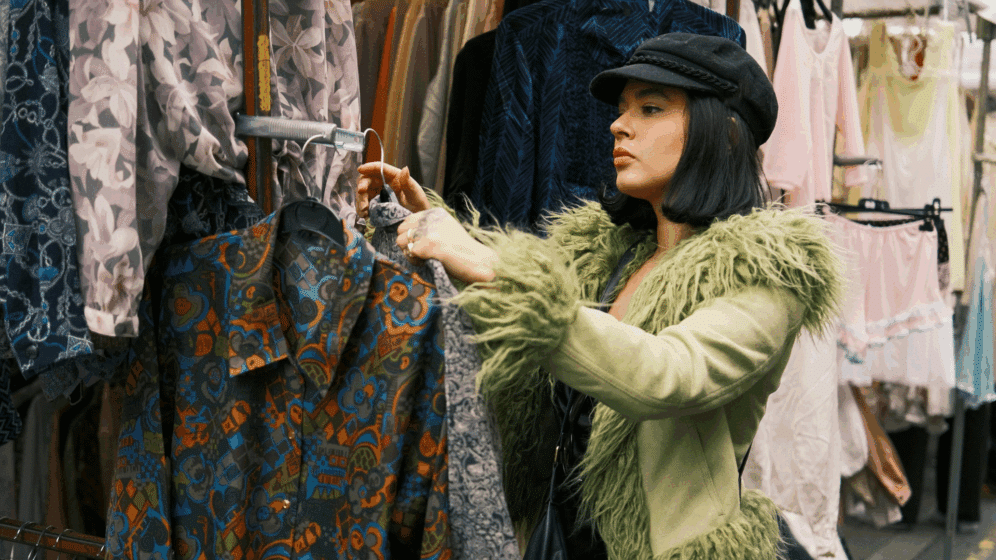
This largely intentional nature of the gesture is accompanied by a diversification of where second-hand gifts are purchased beyond the internet, even if this is the platform to which buyers turn the most (69%, – 4pts vs 2023). Physical » purchasing channels are gaining ground: flea markets are cited by 46% of respondents, second-hand shops by 35% (+8 points vs. 2023), and associations by a quarter. The significant increase in the use of second-hand clothes shops may be part of a fashion phenomenon driven by a desire for more ethical consumption, a desire for uniqueness (finding unique « vintage » pieces) but also for pragmatic reasons, as second-hand clothes are considered less expensive.
Indeed, once again this year, the price argument is the main reason for buying second-hand gifts (51%), ahead of environmental concerns, cited by 4 out of 10 respondents (38%), in line with previous waves. It’s worth noting that the higher the level of education, the more « responsible » the justification (35% of non-graduates vs. 43% of university graduates cite this reason), a sign that this type of consumption combines both purchasing power constraints and the meaning given to the gesture.
A social reception of second-hand gifts marked by a high degree of acceptability, with red lines that remain with regard to certain rites of life
The acceptability of such gifts varies according to the ritual: the rarer the occasion, the less second-hand gifts are tolerated. In this new wave of surveys, the norm is becoming stronger for family occasions: second-hand gifts for Christmas and birthdays are judged « not shocking » by 6 out of 10 French people. On the other hand, for weddings, almost 7 out of 10 (68%) consider it shocking to offer second-hand gifts. On the question of the value of these gifts, the French remain divided, with one in two (52%) believing they have more character and charm than new gifts.
More broadly, attitudes towards second-hand gifts are largely favorable: nearly nine out of ten see second-hand gifts as a good gesture for the environment, more than eight out of ten consider that they can be of as good quality as new ones, and « it’s the gesture that counts » is also supported by a large majority. Finally, 35% plan to buy at least one second-hand gift for Christmas. Once again, a generational difference structures these perceptions and purchasing intentions: young adults (18-34) and households with children are the driving forces behind the boom – both in terms of supply and Christmas purchasing intentions – while senior citizens remain more on the sidelines.